Forced Rhubarb & Ginger Gingham Swiss Roll
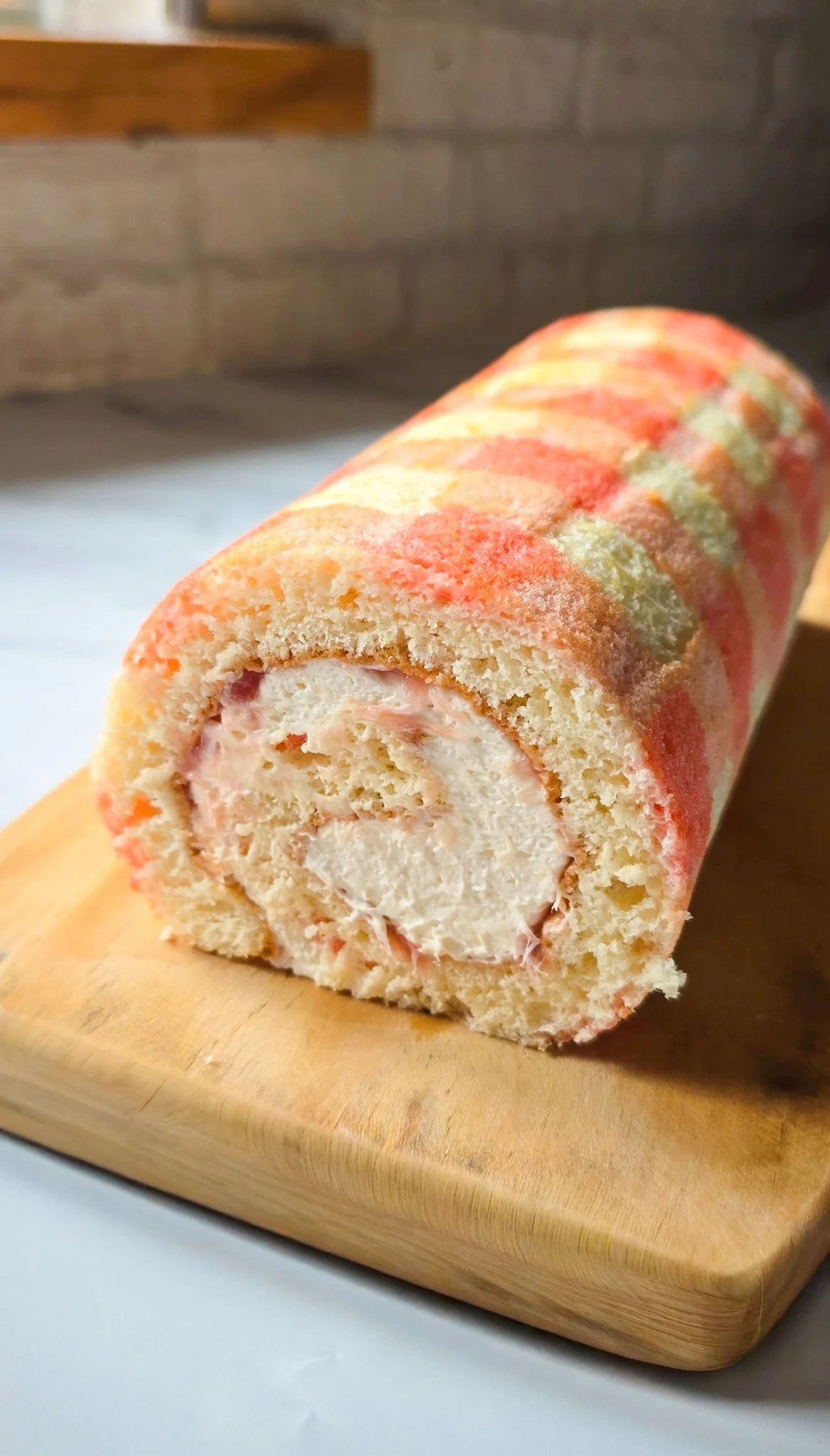
I am a true rhubarb lover and, like many other foodies, await the arrival of forced Rhubarb as if it’s Christmas morning. Its short season makes me even more eager to use it as much as possible before its gone. Its stunning pink hues are the obvious reason for its popularity but it also tastes absolutely delicious. Sweet but tangy, and the perfect accompaniment to custard or cream.
One of my favourite flavours to pair it with is ginger. So I kept the filling of this traditional and went with a fresh ginger cream.
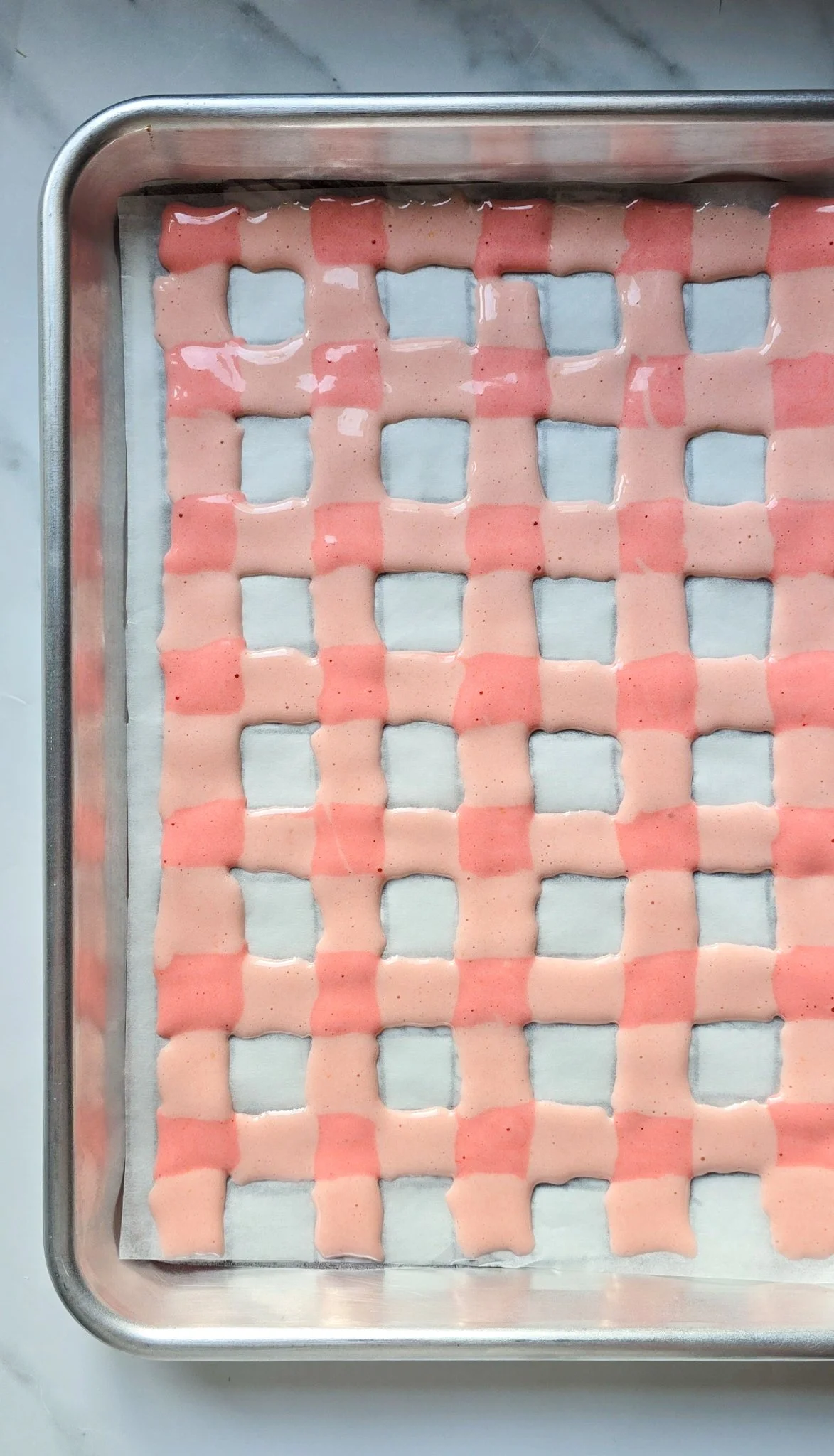
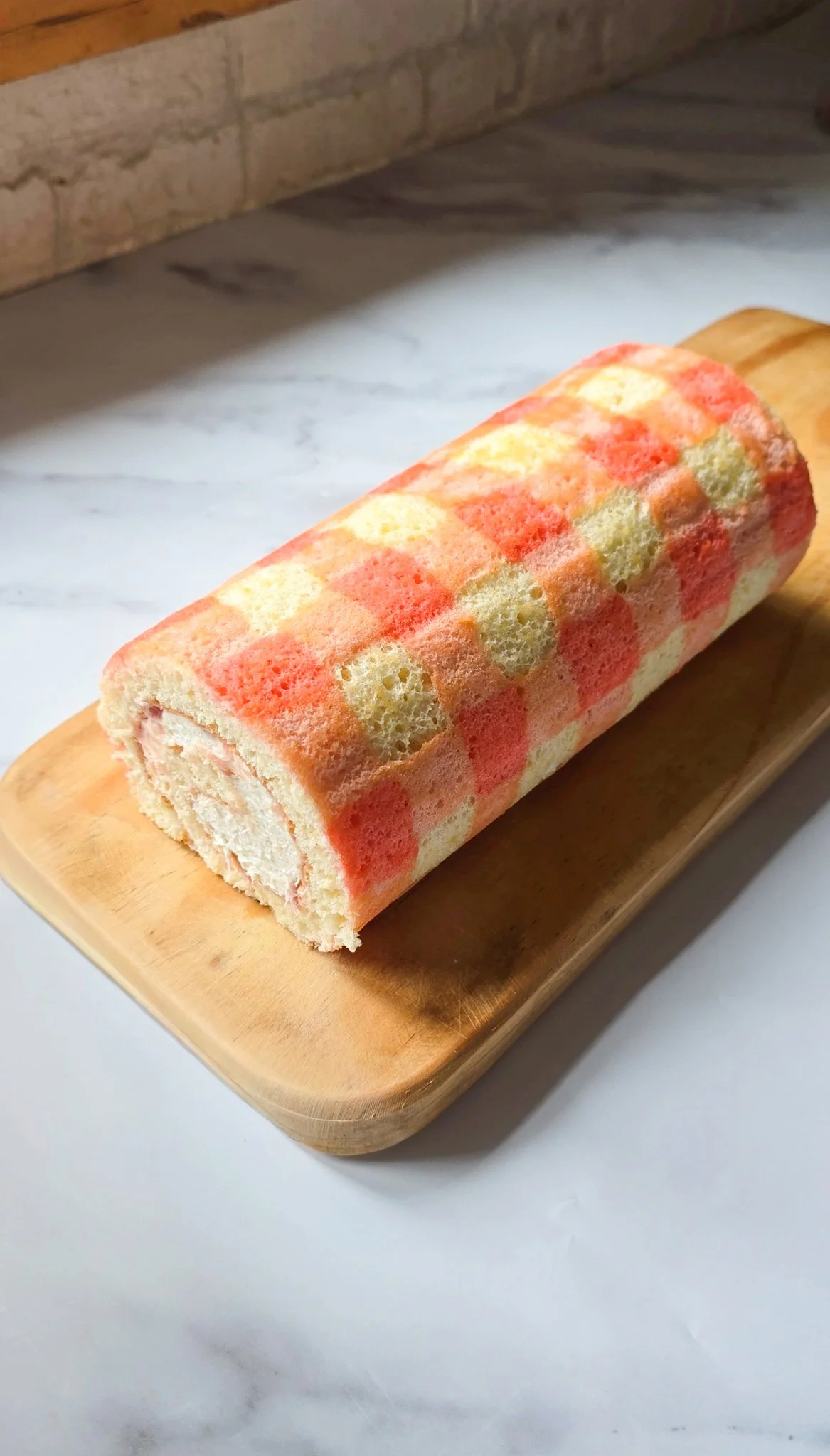
The pink gingham is whimsical and it adds a pop of colour to your afternoon coffee and cake. I took a bit of my sponge batter and coloured it in two shades of pink before piping on the gingham pattern. It went into the oven for 1 minute, just to set it, before piping on the rest of the sponge batter.
I used the method of covering the swiss roll with foil when it came out of the oven and leaving it to cool before filling and rolling it. It worked out so well, absolutely no cracks and the sponge stayed fluffy and pliable. The result is a light-as-air sponge filled with a fruity rhubarb compote and a sweet fluffy ginger cream.
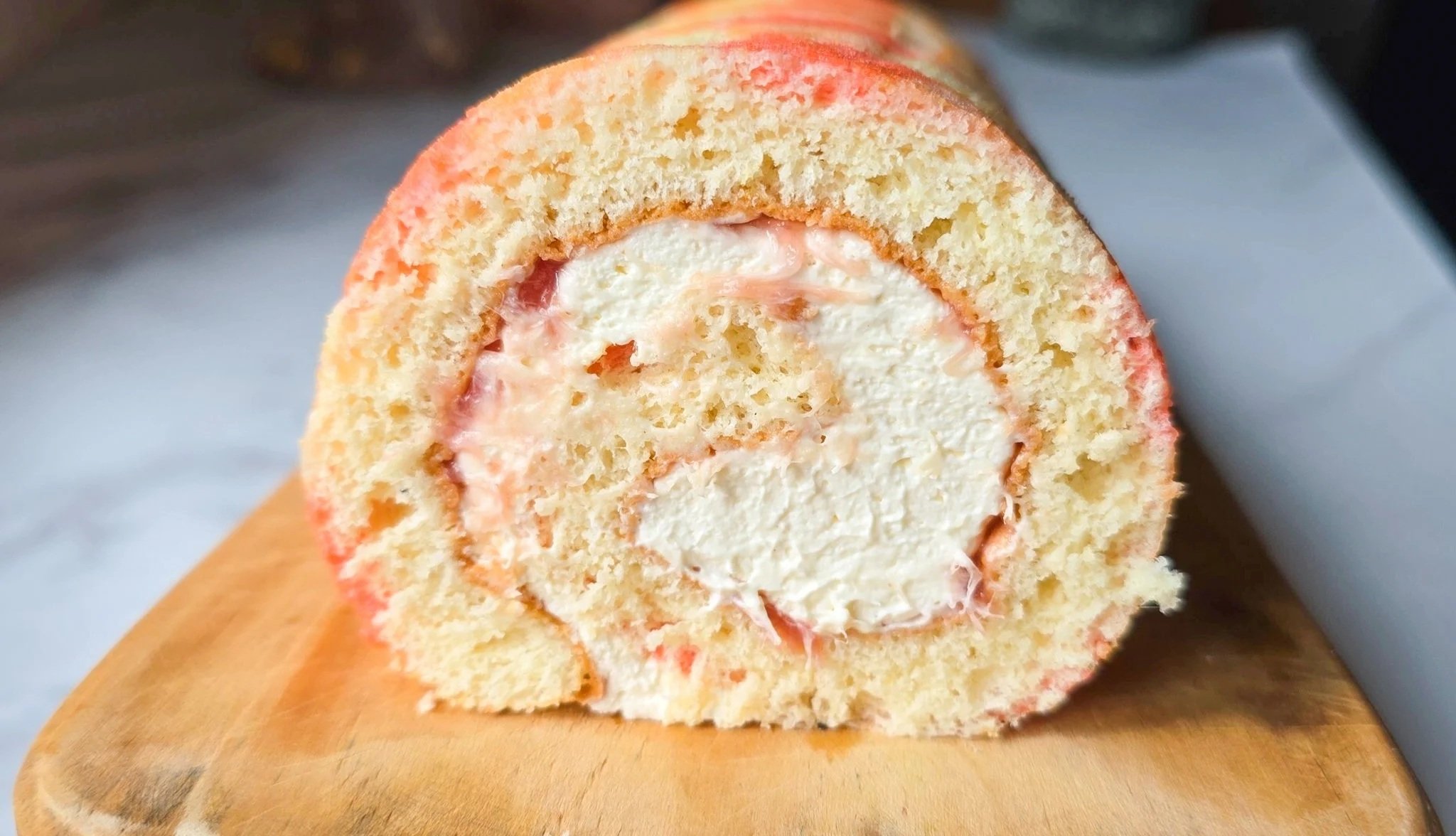
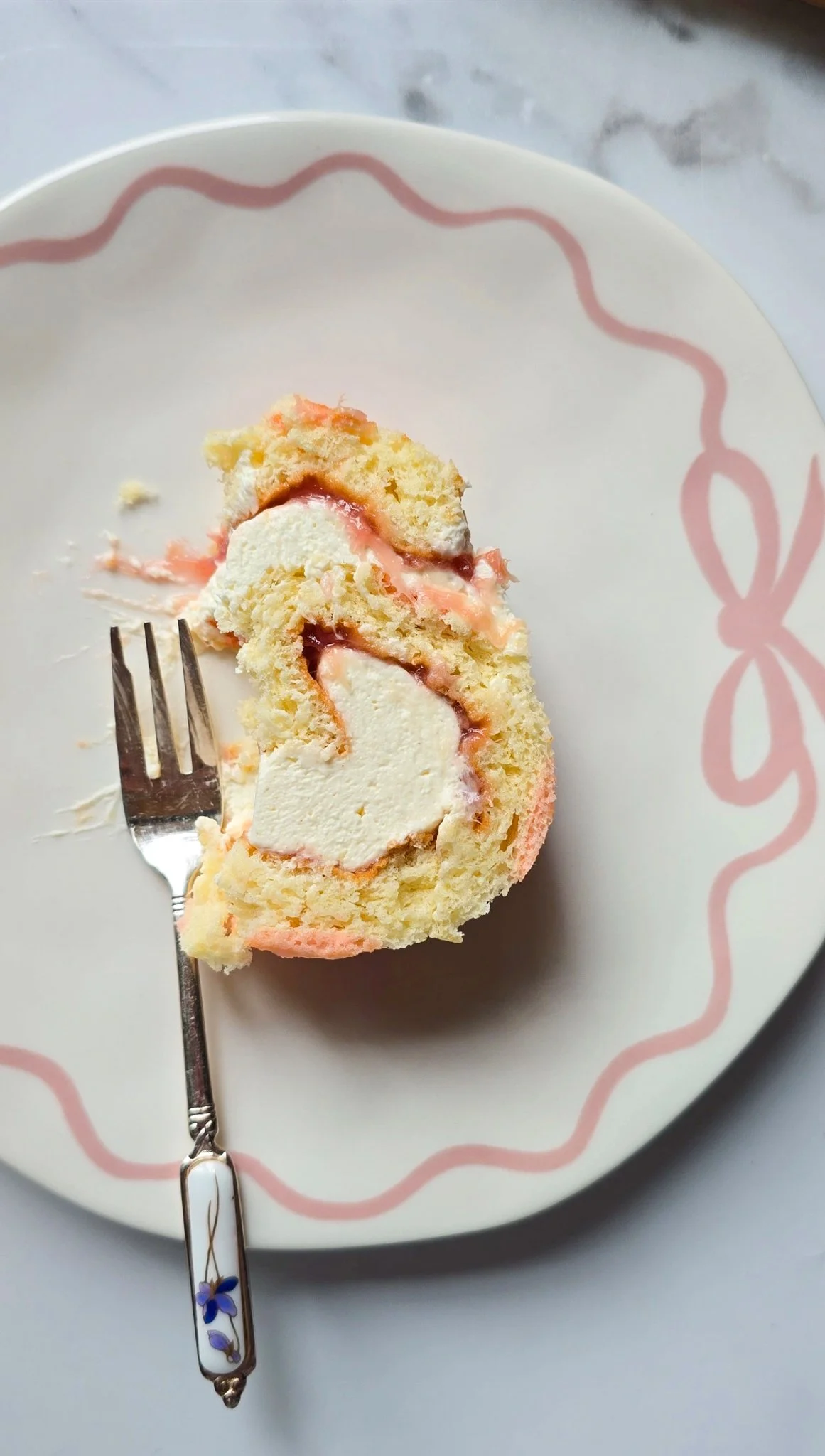
Ingredients - makes one swiss roll (serves 6-8)
Notes: the swiss roll sponge recipe has been adapted from TheScranLine’s recipe. I reduced the size to fit into a 9x12inch baking tray and added in the gingham pattern technique. It’s a great recipe and technique for a no-crack swiss roll!
Rhubarb Compote:
185g forced rhubarb, chopped
small squeeze of lemon juice
70g caster sugar
1/2 tsp cornflour
Gingham Swiss Roll:
60g plain flour
15g cornflour
1/2 tsp baking powder
Pinch of salt
100g egg whites
50g egg yolk
45g sugar, for egg yolks
75g sugar, for egg whites
3/4 tsp warm water
30g vegetable oil
Dash of vanilla extract
red food colouring
Ginger Cream:
200ml double cream
1/2 tsp ground ginger
1/2 tsp vanilla extract
20g caster sugar
Method
Start with the rhubarb compote: place all of the ingredients into a saucepan, apart from the cornflour. Cook on medium heat until the rhubarb begins to soften and some of it’s liquid has released. Continue to simmer the compote until the rhubarb has broken down fully. In a small bowl, whisk together the cornflour and a few tbsp of compote until smooth. Pour this back into the compote and let it bubble for a further 30 seconds to cook out the cornflour. Pour the compote into a container, cover and chill in the fridge for at least 2 hours - until completely cold.
For the gingham swiss roll: Pre-heat your oven to 160°C. Print out a gingham pattern template to fit a 9x12 inch tray. Lay it into the tray and place a piece of parchment on top. Set aside until needed.
In a bowl; combine the plain flour, cornflour, baking powder and salt and set aside. Place your egg whites into the bowl of a stand mixer fitted with a whisk attachment. Whisk the egg whites on medium-high speed until frothy. Gradually add in the 75g of caster sugar and continue to whip the whites until you have a glossy meringue. It should hold its shape but not so firm that the whites begin to break apart. Transfer the meringue into a different bowl. Place the egg yolks, 45g caster sugar and warm water into the bowl of the stand mixer (no need to wash the bowl out.) Whisk the yolks on medium-high until pale and fluffy. With the mixer on high, drizzle in the oil until it has been incorporated. Fold the meringue into the yolk mixture in two or three additions. Sieve in the dry ingredients and gently fold them in until you have no pockets of flour.
Take 40g of the batter and place it into a small bowl. Colour it a dark shade of pink and place it into a piping bag. Using your printed gingham pattern as a guide, pipe your darker squares onto your lined baking tray. Place another 40g of batter into the bowl along with any of your leftover dark pink mix. Mix this to a light pink, adding more colour if needed. Place into another piping bag and pipe the lighter squares of the gingham pattern. Very carefully, slide the gingham pattern print out from underneath the baking paper.
Bake the pattern for 1 minute to set it before piping over the remaining batter, being careful not to disturb the sponge underneath. I like to pipe the plain mix into all of the holes using a piping bag with a big hole cut into the tip, before gently spreading it to an even thickness.
Bake for 12-14 mins until it has risen with an even golden colour on top. As soon as the sponge is out of the oven, run a knife around the edges of tray to release it. Lightly wrap it in foil, completely encasing the sponge. Leave the sponge to cool for 40-50 minutes until it has cooled enough to roll but isn’t cold. By leaving the sponge to steam a little as it cools, it will stop it from cracking.
When you’re ready to fill, whisk all of the ingredients for the ginger cream together until you have soft peaks which hold their shape. Place the cream into a piping bag fitted with a plain nozzle.
Remove the foil from the sponge, place a cooling rack on top and flip the tray upside down onto the cooling rack. Carefully peel off the baking paper to reveal your gingham pattern. Place a new piece of baking paper on top, followed by the baking tray, and flip it back over so that the gingham is facing down on your worktop.
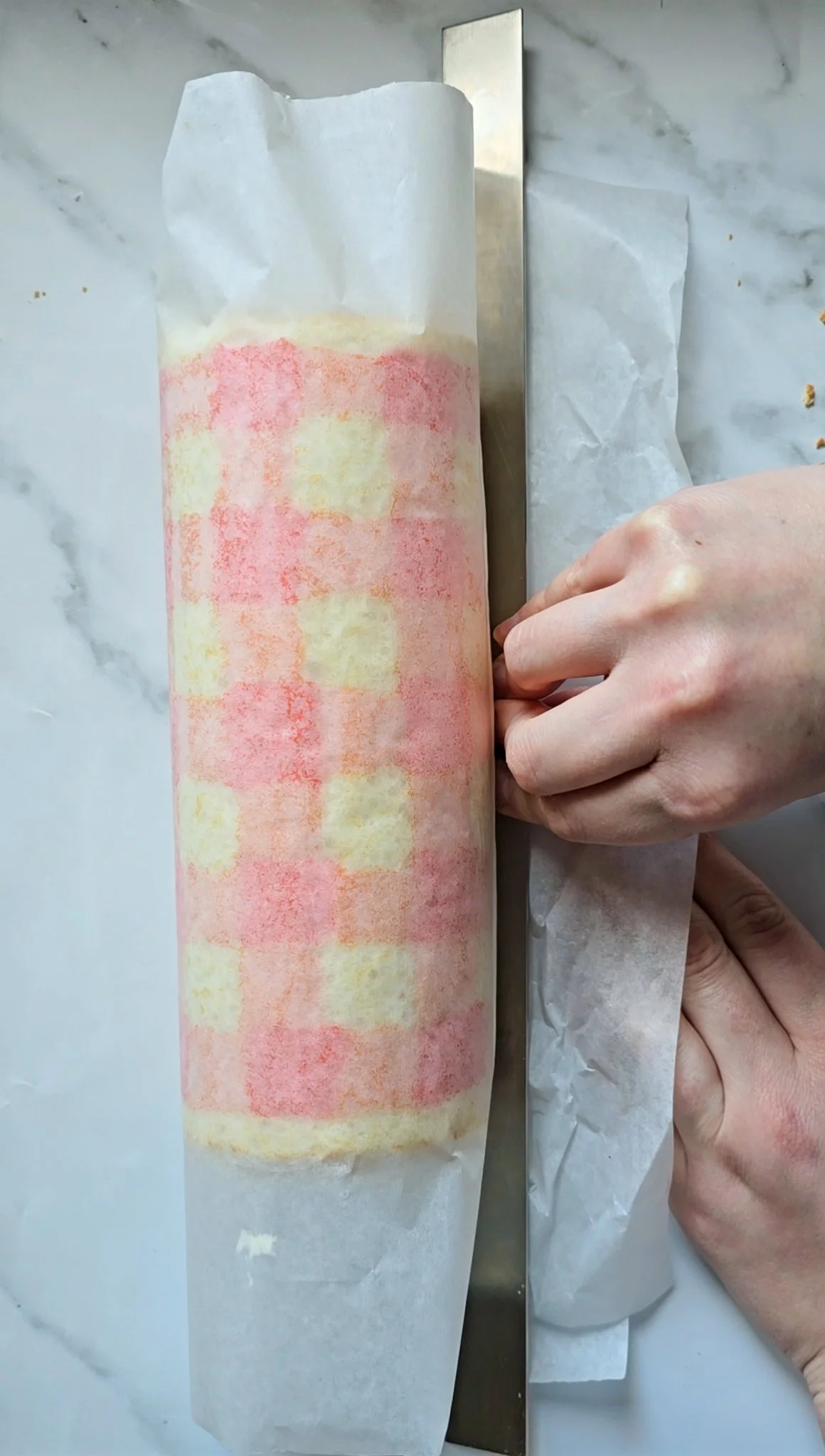
Spread 100g of the rhubarb compote onto the sponge. Pipe a boarder of cream onto the sponge, leaving an inch on the shorter top and bottom edges. Fill the rectangle with cream. Using a palette knife, gently spread out the cream into one even layer. Starting from the shortest side, roll the swiss roll up tightly, using the baking paper to help roll the sponge. Keep the swiss roll tightly rolled up in the baking paper and place it onto a baking tray.
Chill for at least an hour before removing it from the paper and serving.